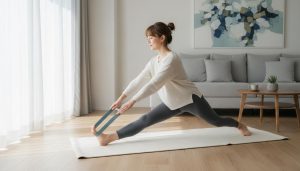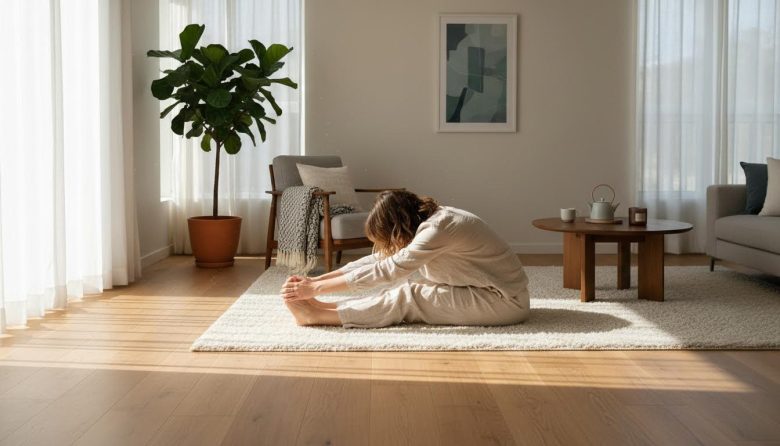
I remember those long days glued to my desk, feeling that nagging tightness in my neck and shoulders creep in by mid-afternoon. My back would slump, and even simple tasks like reaching for a cup felt stiff. That’s when I discovered simple home stretching routines— just 10 minutes a day using only my bodyweight, no gym or fancy equipment needed.
These stretches eased my tension, boosted my energy, and made everyday movements smoother. You can customize them to fit your life, whether you’re a beginner or just short on time. In this guide, I’ll walk you through a gentle 4-pillar framework to build your own routine, plus ready-to-try examples.
Stretching at home fits seamlessly into busy schedules, helping you release built-up stress without disrupting your flow.
Why Home Stretching Deserves a Spot in Your Daily Flow
Home stretching improves mobility, so you move through your day with less resistance. It relieves stress by loosening tight muscles, often leaving you calmer and more focused. Plus, it gives a natural energy boost, countering that post-lunch slump.
Picture this: Before starting daily stretches, I’d end my workday hunched and fatigued, barely wanting to cook dinner. After a week of short sessions, my posture perked up, and I felt lighter tackling evening chores. One reader shared how pairing stretches with her coffee cue turned groggy mornings into energized starts.
These benefits build steadily with consistency, not intensity. Tie it to existing cues like after brushing your teeth. For lasting gains, improving posture with quick daily checks pairs naturally with stretching to support your spine all day.
Regular sessions enhance circulation, reducing aches from sitting. They also promote better sleep when done in the evening. Small, sustainable practices like this create ripple effects in your well-being.
Build Your Routine with These 4 Gentle Pillars
Creating your routine starts with these 4 gentle pillars: assess, choose, sequence, and cue. This framework keeps things simple and adaptable. I built my first routine this way, starting with just 5 minutes.
First, assess your tight spots. Notice where you hold tension—neck from phone use, shoulders from carrying bags, hips from sitting. Spend a minute scanning your body standing or lying down.
Second, choose 4-6 poses targeting those areas. Opt for beginner-friendly ones like child’s pose for the back or seated forward fold for hamstrings. I love cat-cow for its gentle spinal flow.
- Neck: Gentle side tilts.
- Shoulders: Arm circles.
- Hips: Figure-four stretch.
- Back: Seated twist.
Third, set your time and sequence. Aim for 5-10 minutes, holding each pose 20-30 seconds. Flow from head to toe or upper to lower body for smooth progression.
Fourth, add cues to reduce friction. Link it to brushing teeth or after lunch. Write it on a sticky note by your mat. This pillar turned my sporadic tries into a steady routine.
Experiment with one pillar at a time. My personal tweak: I added soft music as a cue, making it feel like a mini-break rather than a chore.
Chosen structured block: table
Compare Beginner Routines to Match Your Morning, Noon, or Night
These sample routines make it easy to pick one that fits your day. Use the table below to compare and choose based on time, focus, and cue. Each is bodyweight-only, with clear steps.
| Routine Name | Target Areas | Duration | Best Time of Day | Key Cue to Start |
|---|---|---|---|---|
| Wake-Up Flow | Neck, shoulders, spine | 5 min | Morning | Right after alarm |
| Desk Reset | Back, hips, wrists | 10 min | Afternoon | Post-lunch break |
| Wind-Down Ease | Full body, legs | 8 min | Evening | Before bed |
| Quick Side Release | Hips, IT band, chest | 6 min | Anytime | After standing up |
| Energy Lift | Full upper body | 7 min | Mid-morning | With coffee sip |
For Wake-Up Flow, start with neck rolls (5 breaths each side), then cat-cow (1 minute), and end with standing arm swings. Desk Reset includes seated twists and hip openers—perfect if you’re remote working. I tried Wind-Down Ease and slept deeper right away.
Match your needs: Tight hips? Go for Desk Reset. Pair any with your 7-day gentle movement routine for everyday to layer in more flow. These options reduce decision fatigue, letting you start small.
Customize further by swapping poses. Track how each feels after a few days. This comparison helps you build ownership over your routine.
Spot Common Blockers and Clear Them with Quick Tweaks
Even simple routines hit snags. Here’s how to spot and fix common blockers with minimal effort.
- No time? Shorten to 3 minutes—pick 3 poses, hold 20 seconds each. I do this during TV ads.
- Forgot to start? Set a phone reminder or place your mat by the door as a visual cue. Environment tweaks like this cut friction instantly.
- Mild soreness after? Warm up with a shower first or march in place. Ease in slower next time.
- Bored with the same poses? Rotate one new stretch weekly from the table. Freshness keeps consistency high.
These fixes turn obstacles into small adjustments. One friend stacked stretches after her shower cue, clearing her “no time” blocker effortlessly. Steady tweaks lead to sustainable habits.
Address blockers early for smoother progress. You’ll notice routines sticking without force.
Track One Tiny Metric for Steady Progress
Your tiny metric: Log “Did I stretch today? Yes/No” in your phone notes app. Takes 5 seconds at day’s end. No numbers, just presence.
I started this after missing days. Seeing a string of Yeses built quiet momentum—small wins stacking into confidence. After two weeks, it shifted from optional to routine.
Review weekly: Celebrate streaks without judgment. If No, note why and tweak one cue. This metric focuses on consistency over perfection.
Pair it with a reward like herbal tea post-log. Sustainable tracking fuels long-term mobility gains. Try it tomorrow—your body will thank you.
Layer Stretching into Habits for Lasting Consistency
Habit stacking glues stretching to what you already do. Attach your routine to a cue like post-meal pause or pre-shower. This reduces mental effort.
Before: Evenings dragged with tight hips from desk time. After stacking Wind-Down Ease before bed, I unwind easier and wake refreshed. Environment tweak: Roll out mat nightly.
Reduce friction by prepping—clear space once weekly. Start tiny: One routine from the table + one cue. Try for 7 days and note your tiny metric.
Consistency compounds: Looser muscles lead to better walks, less stress. For energy ties, consider a beginner’s guide to healthy everyday snacking alongside stretches. Your steady small wins build lasting flow.
You’re capable of this gentle shift. Pick today and feel the ease grow.
Frequently Asked Questions
Can I stretch if I’m new to fitness?
Yes, these routines are designed for beginners. Start with the 5-minute Wake-Up Flow, moving slowly and breathing deeply. Listen to your body, holding poses gently—no forcing.
Build familiarity over days. Many newcomers, like me initially, find it empowering and pain-free from day one.
What if I feel pain during stretches?
Ease off immediately if you feel sharp pain—stretching should feel like a comfortable release. Shorten holds or modify, like bending knees in forward folds. Breathe steadily to relax deeper.
Consult a doctor for ongoing issues. Mild discomfort often fades with consistent, gentle practice.
How do I remember my routine without an app?
Habit stack with reliable cues: After coffee, lunch, or teeth brushing. Use a visible note or mat placement as reminders. Verbalize it aloud when setting up, like “stretch now.”
These low-tech methods build automaticity. I rely on post-shower cue—no app needed.
Is 5 minutes enough to see benefits?
Absolutely—consistency trumps duration. Short sessions daily improve flexibility faster than sporadic long ones. Notice reduced tension within a week via your tiny metric.
Studies and personal stories confirm small, regular doses yield sustainable mobility gains.
Can I adapt these for back pain?
Yes, focus on gentle poses like child’s pose or cat-cow, avoiding deep twists initially. Hold longer on supported back stretches. Start with 3 minutes, warming up first.
Progress slowly; many with back discomfort find relief stacking these into evenings. Seek professional advice if pain persists.