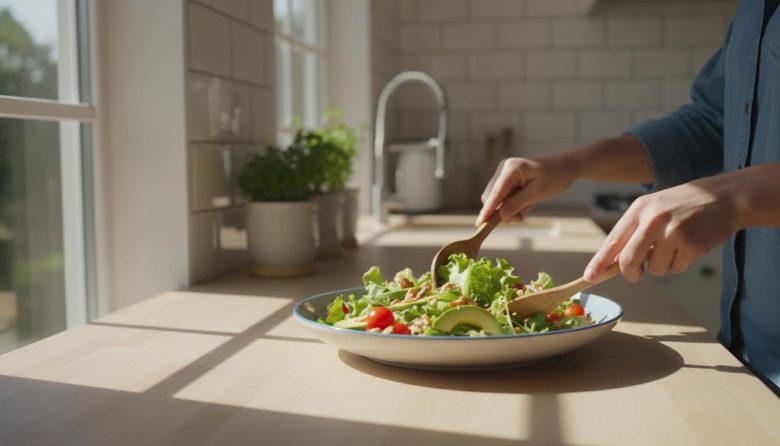
Picture this: it’s noon, your stomach’s rumbling, but the clock’s ticking and the vending machine calls your name. I remember those days—grabbing a bag of chips or a sad desk sandwich that left me crashing by 2 p.m. Then I started making quick lunch salads, and everything shifted. Now, in under 10 minutes, I have a vibrant bowl that keeps my energy steady through the afternoon.
Here are three real benefits I’ve noticed: sustained focus without the slump, more nutrients from fresh ingredients, and a simple routine that fits busy days. My first try? A spinach base with canned tuna and cherry tomatoes—took five minutes, tasted fresh, and I felt full for hours. Ahead, I’ll share a straightforward framework to make this your new normal, with easy steps for consistency.
Stock Your Fridge Like a Salad Pro for Zero-Friction Prep
Building a salad routine starts with smart stocking—think of your fridge as a ready-to-assemble station. I shop once a week on Sundays, stacking it onto my regular grocery run to cut decision fatigue. This creates cues like seeing prepped bins right when hunger hits.
Focus on these essentials: leafy greens like spinach or romaine for the base, proteins such as hard-boiled eggs, chickpeas, or canned tuna for staying power, and crunchy veggies including cucumbers, carrots, bell peppers, and cherry tomatoes. Add fruits like sliced apples or berries for natural sweetness, plus nuts or seeds for texture. Clear glass containers make everything visible, nudging you toward salad over takeout.
One tweak that worked for me: wash and chop veggies right after shopping, storing them in those see-through bins. No more friction from dirty knives mid-lunch rush. This setup turned sporadic salads into a weekly rhythm, with small wins like prepping in 20 minutes total.
For more veggie ideas that pair perfectly here, explore the How to Add More Veggies to Everyday Meals guide—it’s full of gentle ways to build abundance without overwhelm.
Master the 4-Pillar Framework for Salads That Stick
This simple 4-pillar approach makes salads reliable and exciting, no recipes required. Each pillar builds on the last for balance, turning chaos into a repeatable cue. I’ve used it daily for months, adjusting for what’s in my fridge.
- Crisp Base: Start with 2-3 cups of greens like baby spinach or arugula. It’s your volume foundation—light yet filling. Example: I grab a handful straight from the bin as my lunch signal.
- Satisfying Protein: Add 3-4 ounces, such as drained chickpeas, sliced turkey, feta crumbles, or a boiled egg. This curbs hunger crashes. Personal favorite: quinoa cooked in bulk for easy scoops.
- Crunchy Veggies/Fruits: Layer 1 cup of sliced cucumbers, shredded carrots, radishes, or apple chunks. They add pop without sogginess. Habit stack: chop while coffee brews in the morning.
- Flavor-Packed Dressing: Drizzle 2 tablespoons to tie it together—homemade or store-bought. Shake it on last to keep greens fresh. Cue: keep a jar by the bowls.
Assembly takes under 10 minutes: bowl, layer pillars, eat. Before: bland lettuce. After: colorful, textured bowl. This framework scales—double protein for active days, tying into routines like a quick walk.
Transition smoothly by prepping one pillar ahead, like boiling eggs Sunday. Steady progress comes from these small cues, making salads a sustainable habit.
Unlock Flavor Fast with Dressings You Shake and Pour
Great salads shine with dressings that elevate basics to craveable. I ditched store-bought bottles after trying homemade—they’re fresher, cheaper, and store for days. Shake in a jar for zero mess.
First, lemon-tahini: mix 3 tbsp tahini, juice of 1 lemon, 1 minced garlic clove, and water to thin. Creamy and zingy over greens and chickpeas. My before: dry salad. After: restaurant-level yum in seconds.
Next, balsamic vinaigrette: 3 tbsp olive oil, 1 tbsp balsamic, 1 tsp Dijon mustard, pinch of salt. Whisk or shake—perfect for tomatoes and feta. Store in fridge up to a week; low-friction pour.
Yogurt herb: ½ cup plain yogurt, 1 tbsp olive oil, chopped dill or herbs, lemon zest. Tangy for egg or tuna salads. I batch three jars Sunday, grabbing one as cue. These keep salads exciting, fostering consistency.
Quick Lunch Swaps to Salad Success
Use this table to spot easy transitions from old habits to salad wins. Each swap cuts prep time while boosting nutrition, with real examples from my routine. Pick one to try first for quick momentum.
| Old Lunch Habit | Salad Swap | Prep Time | Nutrition Win |
|---|---|---|---|
| Turkey sandwich on white bread | Turkey & avocado salad with spinach base | 15 min → 5 min | More fiber from greens, healthy fats from avocado |
| Fast-food burger and fries | Chickpea & feta salad with cucumber crunch | 20 min → 8 min | Higher plant protein, veggie vitamins over fried carbs |
| Leftover pizza slice | Quinoa veggie salad with cherry tomatoes | 0 min → 10 min | Antioxidants and steady energy vs. refined grains |
| Chips and soda | Tuna cucumber salad with carrot ribbons | 2 min → 3 min | Omega-3s and hydration boost over empty calories |
| Desk yogurt cup | Greek yogurt chicken salad with apple slices | 5 min → 7 min | Balanced protein-fiber mix for longer fullness |
These swaps create small wins, like saving 10 minutes daily. Notice the nutrition edges—fiber for steady blood sugar, proteins for satiety. Stack with a Simple Weekly Meal Plan for Light Eating for full routine flow.
Bust Through Common Blockers with Simple Fixes
Even easy habits hit snags—here’s how to smooth them with practical cues. I’ve faced each, tweaking my setup for steadiness.
- No time midweek: Batch-chop veggies Sundays in 20 minutes; store in cues like labeled bins. Turns “rushed” into “grab and go.”
- Salads feel boring: Rotate one pillar weekly—proteins from eggs to nuts. My try: theme nights kept it fresh without overwhelm.
- Forget to prep: Habit stack with breakfast—boil eggs while brushing teeth. Visible fridge stock nudges consistency.
- Not filling enough: Amp protein to 4oz and add seeds. Pair with gentle movement like a Beginner Guide to Gentle Home Strength Exercises for active balance.
These fixes reduce friction, turning blockers into steady progress. Start with one for sustainable rhythm.
Track One Tiny Metric for Sustainable Salad Momentum
Measure gently to build lasting habits—no spreadsheets needed. Track “salad days per week” in your phone notes app. Jot yes/no after lunch; it’s one tap.
Example: Week 1, I hit 2/5 days amid busyness. Week 2, 4/5 with fridge cues. Celebrate small wins like “three in a row” with a favorite tea.
This metric spotlights patterns, like prepping boosting scores. Steady tracking fosters consistency without pressure.
Jumpstart with This 7-Day Cue: Pick One Pillar + One Swap
Ready to start? Choose one pillar to master, like “crisp base,” and one table swap, such as sandwich to turkey salad. Set a cue: post-lunch bowl photo in notes.
Try for 7 days—note your tiny metric daily. This builds routine gently, stacking small wins into habit. You’ll notice steadier energy soon.
Extend by rotating next week. Sustainable salads await your first cue.
Frequently Asked Questions
Can I make salads the night before without sogginess?
Yes, layer smartly: keep dressing separate in a small jar, greens in an airtight container, and crunchy items like carrots on top. I’ve prepped mine this way for desk lunches—they stay crisp overnight. Add protein just before eating if possible for peak freshness.
What if I hate chopping veggies every day?
Batch prep on Sundays: spend 20 minutes washing and slicing a week’s worth into clear bins as visual cues. Use pre-washed bags for zero-chop days to ease in. This cuts daily friction, making salads a quick grab from my routine.
Are these salads filling enough for active days?
Absolutely—layer in extra protein like quinoa or eggs, plus nuts for calories. One routine tweak: add ½ cup cooked grains. It sustains energy for walks or light strength work without heaviness.
How do I keep costs low for daily salads?
Buy seasonal produce, bulk nuts, and versatile staples like chickpeas. Track a tiny metric: weekly salad spend under $20. Shop sales and freeze extras for steady savings.
What’s a good first swap for sandwich lovers?
Go for the turkey & avocado salad from the table—same flavors, less bread. Habit stack: keep bread on the side if needed, easing the transition. It preps in 5 minutes with your stocked fridge.