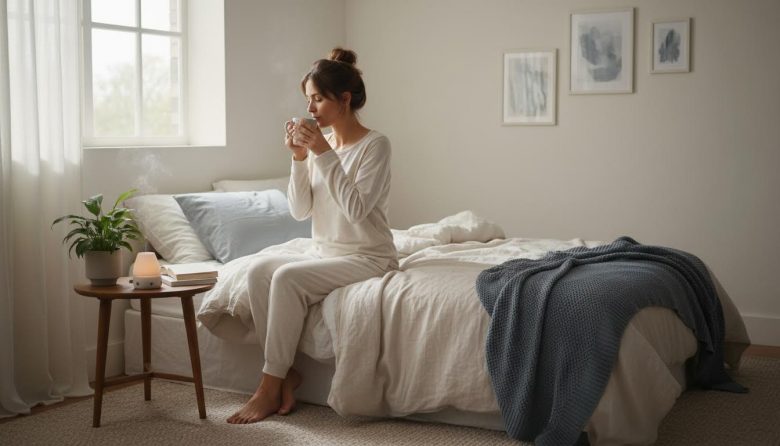
I remember those nights when I’d lie awake, mind racing from the day’s chaos, staring at the ceiling until 2 a.m. Mornings felt like dragging through fog, and even coffee couldn’t shake the grogginess. That changed when I started small with sleep hygiene—simple tweaks to signal my body it’s time to rest.
Sleep hygiene is about creating cues and routines that make quality rest natural and sustainable. It’s not about perfect discipline; it’s steady habits that build over time. For me, dimming lights an hour before bed was the first cue that stuck, leading to mornings where I wake feeling ready, not wrecked.
Before, my evenings looked like this: scrolling screens until midnight, bedroom cluttered with work stuff, chugging evening tea. After adopting a few basics, I now unwind with herbal tea, a quick journal, and a cool, dark room. I fall asleep faster and wake energized, even pairing it with a nourishing start like the How to Make Simple Healthy Breakfasts Quickly routine.
Ahead, I’ll share a 4-pillar framework to ease into rest, environment tweaks, do’s and don’ts, and fixes for common hurdles. These come from my own trials—small wins that add up without overwhelm. Let’s build your path to better sleep, one cue at a time.
Ease Into Rest with a 4-Pillar Wind-Down Framework
This framework guides your evening with four simple pillars. Each builds on the last, using habit stacking to reduce friction. Start with just one pillar for a week to feel the momentum.
- Set a consistent wind-down cue. Choose a trigger like brushing teeth or changing into pajamas at the same time nightly. I stack mine with dinner cleanup—once dishes are done, lights dim. This cues your body clock without force.
- Unwind your body gently. Add 5-10 minutes of stretching or deep breathing. I tried a bedtime yoga flow after showering; it releases tension from the day. Stack it on your cue for seamless flow.
- Nourish your mind with calm input. Read a physical book or listen to soothing audio. Swap news for fiction—I stack this on my stretches, feeling my thoughts settle. Keep it light to avoid stimulation.
- Prep tomorrow to quiet worries. Lay out clothes or jot three next-day tasks. This friction reducer worked wonders for me; I stack it last, sliding into bed worry-free. Small prep means steady sleep gains.
Try stacking pillar one on an existing routine, like post-dinner. Over days, consistency turns it into autopilot rest.
Transform Your Bedroom into a Sleep Haven
Your bedroom sets the stage for rest—think cues that whisper “sleep here.” Cool it to 65°F with a fan or open window; I added breathable sheets and noticed deeper sleep right away. Darkness matters too—blackout curtains block streetlights, creating that cave-like calm.
Swap clutter for comfort: keep work devices out, add soft lighting. Before tweaks, my room was a to-do list—phone charging on the nightstand, laundry piled. After, it’s a haven: lavender pillow spray as a scent cue, mattress topper for support.
Here’s a quick before/after: Before, I’d toss in a stuffy, lit room, waking multiple times. After environment shifts—cool air, total dark, cozy bedding—I sleep through, waking refreshed. Test one tweak tonight; small changes yield big recovery.
Pair this with daytime hydration from the 30-Day Hydration and Wellness Daily Plan to avoid nighttime bathroom trips. Your space shapes habits effortlessly.
Sleep Hygiene Do’s and Don’ts
Quick swaps make hygiene stick—focus on cues over rules. I learned this through trial: one small do replaced a don’t, building consistency. The table below breaks it down with whys and examples.
| Do This | Don’t Do This | Why It Helps |
|---|---|---|
| Dim lights 1 hour before bed | Use bright overheads | Triggers melatonin, your natural sleep signal |
| Sip herbal tea like chamomile | Drink caffeine past noon | Calms without jitters; eases into rest |
| Journal worries for 5 minutes | Ruminate in bed | Clears mental clutter before lights out |
| Keep bedtime steady, even weekends | Hit snooze endlessly | Stabilizes circadian rhythm for steady energy |
| Try progressive muscle relaxation | Check emails late | Releases physical tension; avoids stimulation |
| Eat dinner 3 hours before bed | Snack heavily at night | Prevents digestion from disrupting sleep cycles |
| Use white noise or fan | Blast TV for background | Masks distractions without blue light |
| Expose to morning sunlight | Stay in dark too long | Resets body clock for better nights |
Pick one row to start; I began with dimming lights and herbal tea swap. These create low-friction paths to sustainable sleep.
Handle Light, Screens, and Movement Smartly
Light and screens trick your brain into daytime mode—blue light blocks melatonin. I wear amber glasses after 8 p.m.; it’s a simple cue that cuts glare. Apps with night mode help, but pairing with screen curfews works best.
Movement timing matters: exercise earlier, like a lunchtime walk stacked on lunch. Evening tries left me wired; daytime shifts built steady energy. This pairs well with How to Practice Mindful Eating at Every Meal to curb late hunger.
Transition smoothly: set a phone “parking spot” outside the bedroom. My routine—glasses on, walk earlier—leads to faster sleep onset. Steady cues turn these into habits without effort.
Spot and Fix Common Sleep Blockers
Blockers sneak in, but gentle fixes restore flow. Spot them without self-judgment; tweak one at a time for small wins. Here’s how to handle top ones.
- Weekend lie-ins throw off rhythm. Fix: Set a consistent wake cue, like coffee brewing. I use sunrise light—gentle consistency over perfection.
- Late-night eating disrupts rest. Fix: Shift dinner earlier, add a light pre-bed cue like fruit. Stacking on wind-down helps sustainably.
- Stress loops keep you awake. Fix: Evening brain dump list. My 3-minute journal cue unloads thoughts effectively.
- Irregular schedules from work. Fix: Portable cues like earplugs or breathing app. Habit stack on commute home for flexibility.
- Too much evening fluid. Fix: Cut off after 7 p.m., track intake. Ties into hydration plans for balance.
Address one blocker this week; progress builds from there. These keep your hygiene routine resilient.
Track One Tiny Metric for Lasting Sleep Wins
Measure bedtime consistency: note the time you turn off lights nightly in a simple app or notebook. Aim for within 15 minutes of your target— that’s your tiny metric. I started this and saw patterns, adjusting cues for steadier sleep.
No fancy tools needed; one line per night shows small wins. It motivates without pressure, highlighting what works. Over a week, you’ll spot sustainable shifts.
Here’s your CTA: Choose one habit from the framework—like dimming lights—plus one cue, such as post-dinner. Try for 7 days, tracking your metric. You’ll feel the difference; celebrate the steady progress.
Frequently Asked Questions
What if my schedule makes routines impossible?
Flexible cues adapt easily—stack wind-down on whatever ends your day, like post-shower breathing. Shorten pillars to 2 minutes if needed; consistency trumps length. I shifted mine for night shifts, using portable habits like audio guides.
Can I still have evening coffee sometimes?
Swap timing to before 2 p.m., or try decaf alternatives like dandelion tea. Occasional slips are fine; focus on patterns over perfection. Track how it affects your metric to find your balance.
How long until I notice better sleep?
Small wins often hit in 7 days, like easier fall-asleep times. Steady progress builds over 2-4 weeks as cues strengthen. My mornings improved first—gentle signs of lasting change.
What about naps—good or bad for hygiene?
Short naps (20-30 minutes) early afternoon boost without interference. Avoid late ones; set a cue like post-lunch timer. They fit routines if they don’t steal night sleep—test with your metric.
My partner snores; how to adapt?
Try earplugs as a bedtime cue, or white noise machines for shared calm. Discuss gentle routines together, like joint wind-downs. I added a fan for my setup—small tweaks maintain your hygiene flow.