Imagine slipping strength into your busy day right at home, no gym or gear required. These gentle exercises build muscle tone, sharpen focus, and ease daily tasks like lifting groceries or chasing kids. You gain steady energy boosts without sore mornings or rigid schedules.
As Alex Rivera, I design routines for real lives—quick setups, clear cues, and tweaks for any fitness level. This beginner guide focuses on bodyweight moves that fit 15-20 minute sessions. Start with consistency over reps; small daily wins stack into noticeable posture improvements and mood lifts in weeks.
Picture your before: evenings slumped on the couch, back aching from desk hours. After two weeks: standing taller, carrying bags effortlessly, sleeping deeper. That’s the sustainable shift. Ready for your framework?
Why Gentle Strength Transforms Your Everyday Energy
Gentle strength work reshapes how you move through life. It supports better posture during long work calls, making chores feel lighter. Energy flows steadier—no crashes after meals.
Consider a typical day. Before, bending to tie shoes strains your lower back. After consistent sessions, those motions smooth out as core and legs firm up. Mood lifts follow; endorphins from simple moves rival a brisk walk.
Studies back this: low-impact resistance builds mitochondria in muscles, fueling all-day stamina. Busy parents report easier playtime with kids. Office workers note less neck tension. These shifts happen through routine, not intensity.
Your body adapts quietly. Joints stay happy with controlled form. Tie this into simple 10-minute evening relaxation routines for recovery. Next, set up the pillars that make it stick.
Set Up Your 4-Pillar Home Strength Framework
Your framework rests on four pillars: warm-up, core moves, cool-down, reflection. Each takes 3-5 minutes. Stack it post-breakfast or after brushing teeth for automatic flow.
- Pillar 1: Warm-up cue (2 minutes). Stand tall, breathe deeply, march in place. Cue: After coffee sip. Tweak: Sit if standing feels off. Wakes muscles gently.
- Pillar 2: Core moves (10 minutes). Pick 3-4 from the six below. Cycle through 8-10 reps each, 2 sets. Time estimate: Steady pace, rest 30 seconds between.
- Pillar 3: Cool-down stretch (3 minutes). Hold gentle stretches per move. Focus on breath. Links well to your 7-day gentle movement routine for everyday.
- Pillar 4: Reflection note (1 minute). Jot one win in phone notes, like “Felt steady on squats.” Builds proof of progress.
This structure cuts decision fatigue. Environment tweak: Clear a 4×4 foot space near a wall and sturdy chair. Practice once daily for rhythm. Friction drops, habits form. Move to mastering the moves.
Master 6 Essential Bodyweight Moves for Full-Body Coverage
These six cover push, pull, legs, core—full body without overwhelm. Each builds foundational strength. Aim for controlled reps; quality trumps quantity.
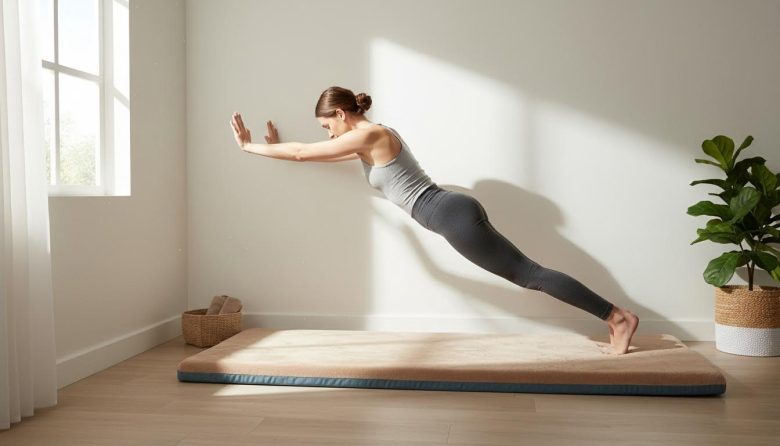
1. Wall Push-Up: Face wall, hands shoulder-width at chest height. Bend elbows to lean in, push back. Targets chest, shoulders, arms. 8-12 reps.
2. Chair Squat: Stand before chair, feet hip-width. Lower until butt taps seat, stand. Strengthens legs, glutes. Hold chair arms for balance tweak.
3. Knee Plank Hold: From knees, forearms down, body straight. Hold 20 seconds. Core engagement without strain. Drop to rest on belly if needed.
4. Bird Dog: On hands and knees, extend opposite arm and leg. Hold 5 breaths, switch. Improves balance, back stability. Keep hips level.
5. Wall Angel: Back to wall, arms bent at 90 like goalposts. Slide up and down slowly. Opens shoulders, fixes posture. 10 reps.
6. Standing Calf Raise: Feet hip-width, rise onto toes, lower slow. Hold wall for support. Tones calves for better walking stability. 12-15 reps.
Safe Strength: Do’s and Don’ts for Beginners
| Exercise | Do This | Don’t Do This |
|---|---|---|
| Wall Push-Up | Keep core tight, elbows at 45° to body, gaze forward | Arch back or lock elbows; breathe steadily |
| Chair Squat | Feet flat, knees track over toes, chest up | Rush down or let knees cave inward |
| Knee Plank Hold | Align shoulders over elbows, squeeze glutes | Sag hips or crane neck up |
| Bird Dog | Extend slow, keep hips square, breathe out | Rotate torso or rush the hold |
| Wall Angel | Press low back to wall, slide arms controlled | Shrug shoulders or force past comfort |
| Standing Calf Raise | Rise smooth, lower with control, use wall lightly | Bounce quickly or grip wall hard |
Use these cues for flawless form. Film yourself once for tweaks. These moves scale: fewer reps first week. Now, cue them into your day.
Ways to Cue Your Routine for Automatic Consistency
Cues turn intention into action. Stack after morning coffee: sip, then warm-up. Reduces “when” decisions.
Environment tweaks lower friction. Roll out a mat, place chair ready. Post-teeth-brush: one squat set cues the pillar flow.
Try audio cues. Pair moves with how to use music for fun gentle workouts—upbeat tracks for squats, calm for planks. Visual reminder: phone wallpaper says “Strength cue: now.”
One reader stacked bird dogs after feeding pets—now automatic. Track cue success weekly. These build the routine neural pathway. Spot blockers next.
Common Blockers and Practical Fixes to Keep Momentum
No time hits everyone. Fix: Shrink to 10-minute version—pick two moves, one set. Still counts as win.
Muscle soreness? Rest cue: Skip a day, walk lightly. Foam roll gently or use warm shower. Eases in 48 hours.
- Forgetfulness: Set phone reminder at cue time, like 8 AM post-coffee. Voice note: “Time for pillars.”
- Motivation dip: Reflect on one benefit, like “Easier stairs.” Pair with friend check-in weekly.
- Space crunch: Use doorway for wall moves, bed edge for bird dog. Tweak to fit.
These fixes keep steady flow. One busy mom cut sessions to chair-only on travel days—progress held. Momentum rebuilds fast. Track your tiny metric ahead.
Your Tiny Metric: Track Sessions Completed Weekly
Log just one thing: sessions done per week. Aim 3 in notes app. Takes 10 seconds.
Why it works: Visual proof stacks small wins. Week 1: 2/3. Week 2: 3/3. Dopamine from streaks fuels more.
Tweak: Add quick mood note—”Energized post-plank.” Reviews show patterns, like best cues. Sustainable tracking, no overwhelm. Launch your 7-day starter now.
7-Day Starter: Pick One Move + One Cue
Choose chair squat + post-meal cue. Day 1-7: 8 reps, 2 sets, full pillar flow. 15 minutes total.
- Days 1-3: Focus form, note feel.
- Days 4-7: Add bird dog, track metric.
Expect looser pants feel, taller stance. Steady wins compound. After 7 days, swap in wall push-up. Your strength routine lives here.
Frequently Asked Questions
How often should beginners do these exercises?
Start with 3-4 days per week, spacing rest days for recovery. This builds consistency without overload. Listen to your body— if energized, add a fourth day after week two.
What if I feel pain during a move?
Stop immediately and tweak form using the table cues. Mild discomfort in muscles is normal, but sharp pain signals issue. Consult a doctor if it persists beyond 24 hours; prioritize gentle modifications.
Do I need any equipment?
No equipment required—rely on bodyweight. A sturdy chair and wall are optional helpers for stability. These keep sessions accessible anywhere, from hotel rooms to kitchens.
How do I progress beyond beginner?
After two weeks of steady sessions, add 2-4 reps per move or introduce a fourth exercise. Progress slowly for sustainable gains. Revisit your tiny metric to guide tweaks.
Can I do this with injuries?
Yes, with modifications—skip aggravating moves and focus on safe ones like seated versions. Check with a physical therapist for personalized cues. Always prioritize gentle, pain-free movement.