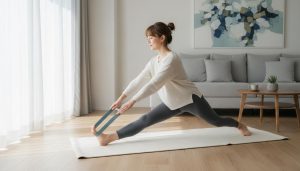
Picture this: You roll out of bed on a hectic weekday, unroll a mat in your living room, and flow through five basic poses in just 10 minutes. Suddenly, tension eases from your shoulders, your mind clears, and you carry steady energy into meetings or errands. Home yoga fits busy schedules without demanding hours or fancy gear.
This guide delivers a practical framework tailored for beginners. You’ll get five essential poses with exact cues, hold times, and tweaks for tight muscles or small spaces. Build consistency through low-friction habits, aiming for small wins like deeper breaths and looser hips in days.
Expect sustainable progress: better posture from desk life, reduced back strain, and a calm anchor amid chaos. No prior experience needed—just a quiet corner and curiosity. Let’s set up your routine starting with the basics.
Create Your Yoga Corner: Low-Friction Setup for Daily Practice
Start small to cut setup friction. Dedicate one square meter in your bedroom or hallway—any spot free of clutter works. Clear it once: move chairs aside, sweep the floor.
Your 5-minute prep routine builds the cue for consistency:
- Grab a towel or yoga mat (roll it out nightly, 30 seconds).
- Dim lights or light a candle for calm (20 seconds).
- Place phone on silent across the room (10 seconds).
- Optional: Queue soft music from How to Use Music for Fun, Gentle Workouts to signal start (1 minute).
Habit stack this with coffee brewing or brushing teeth. Over time, seeing the mat becomes your automatic cue. Tweak for apartments: Use a folded blanket for cushioning on hard floors.
This environment tweak sustains practice. Busy parents add kid toys to the side, reclaiming space later. Result: Zero excuses, flow ready in under a minute daily.
With your corner set, anchor every session with breath for focused calm. This simple step primes your body before poses.
Anchor with Breath: Pranayama Basics Before Every Pose
Breathwork, or pranayama, centers you fast. It oxygenates muscles and quiets racing thoughts in 2 minutes flat. Practice this 3-step framework seated or standing.
- Inhale through nose for 4 counts, expanding belly (not chest).
- Hold for 4 counts, feeling ribs expand.
- Exhale through mouth for 6 counts, softening shoulders.
Repeat 5-8 rounds. Cue: Place one hand on belly to track movement. If mind wanders, return to breath count—no judgment.
Beginner tweak: Shorten to 3-3-4 if dizzy. Pair with eyes closed for deeper calm. This routine reduces practice friction, making poses feel steadier.
Over weeks, notice easier focus at work. Transition now to your first pose: Mountain, the foundation for alignment.
Mountain Pose and Variations: Build Steady Core Strength
Mountain Pose (Tadasana) grounds you like a tree. Stand feet hip-width, toes spread. Arms at sides, palms forward.
Key cues for 30-60 second holds:
- Root through all four foot corners.
- Stack hips over ankles, shoulders over hips.
- Gaze forward, lift chest lightly.
Variation: Reach arms overhead, palms facing (Urdhva Hastasana). Hold, then sway gently side to side. Builds core without crunches.
Tweaks for beginners: Back against wall for feedback. Wobbly ankles? Step feet wider. Practice 2-3 rounds daily for posture gains.
This pose cues whole-body awareness. Small win: Feel taller post-practice. Flow next to Child’s Pose for release.
Child’s Pose Flow: Release Tension in Back and Hips
Child’s Pose (Balasana) restores after standing work. Kneel, big toes touch, knees wide. Fold forward, arms extended or by sides.
Hold 30-60 seconds with these cues:
- Breathe into low back, letting forehead rest.
- Walk hands left/right for hip opener (10 seconds each).
- Rock side to side for gentle massage.
Transition: Inhale to lift torso halfway, exhale fold deeper. Repeat 3x. Eases desk-induced tightness sustainably.
Tweak: Blanket under knees if sore. Tight hips? Keep knees together. Consistency here yields looser mornings.
From rest, energize with Downward Dog to Plank. This combo strengthens full body.
Downward Dog to Plank: Full-Body Balance Builder
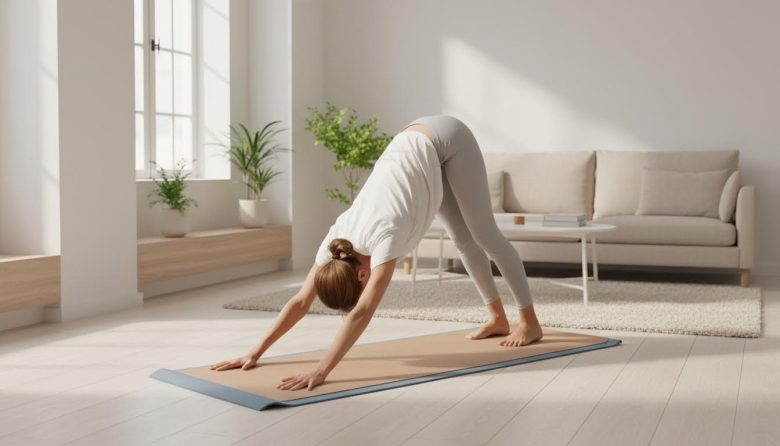
Downward Dog (Adho Mukha Svanasana) stretches hamstrings. From hands and knees, lift hips up/back. Form inverted V.
Hold 30 seconds:
- Hands shoulder-width, press into palms.
- Heels toward floor (bend knees okay).
- Head between arms, neck long.
Shift forward to Plank: Shoulders over wrists, body straight. Hold 20-30 seconds, core lightly engaged.
1-minute sequence: Dog 30s, Plank 20s, knees-down mod for wrists/shoulders. Repeat 2x. Builds arm and core strength steadily.
Tweaks: Wall version for tight hamstrings—hands on wall, step back. Pedal heels for calves. Steady practice boosts balance.
These poses form your core five. Use the checklist below for daily tracking.
| Pose | Hold Time | Key Alignment Cue | Daily Check |
|---|---|---|---|
| Mountain Pose | 60 seconds | Feet rooted, hips stacked over ankles | Did feet feel grounded? |
| Child’s Pose | 45 seconds | Knees wide, big toes touching | Did back release tension? |
| Downward Dog | 30 seconds | Hands shoulder-width, heels toward floor | Did hamstrings lengthen? |
| Plank Pose | 20-30 seconds | Shoulders over wrists, core engaged | Did body stay straight? |
| Seated Forward Fold | 30 seconds | Bend knees, spine long | Did breath deepen? |
| Bonus: Savasana | 60 seconds | Palms up, full body relaxed | Did mind settle? |
Tick mentally or note after practice. This reinforces cues without overwhelm.
Common Blockers and Quick Fixes for Consistent Practice
No time hits everyone. Shrink to 5 minutes: Breath + one pose. Stack post-shower for automatic cue.
Sore muscles after first tries? Alternate rest days. Use props like cushions under knees—builds sustainably.
Lack of motivation? Cues matter: Lay mat visible overnight. Add variety from Light Home Workout Routine for Weekdays once comfy.
Tiny space? Wall yoga: Mountain against door, seated folds. These fixes cut friction, ensuring small wins stack.
Now integrate into a full flow. Track one metric for progress.
Your 10-Minute Daily Flow: Stack Poses for Sustainable Progress
Your 4-step framework fits mornings or evenings:
- Breath anchor (2 minutes): 3-step pranayama, eyes closed.
- Strength builders (4 minutes): Mountain 60s + arms up, Downward Dog to Plank x2.
- Release flow (3 minutes): Child’s 45s, Seated Forward Fold 30s, rock hips.
- Cool down (1 minute): Savasana, scan body from toes up.
Total 10 minutes. Habit stack: After breakfast or before bed. Tweak: Morning for energy, evening before Simple 10-Minute Evening Relaxation Routine.
Tiny metric: Track “days on mat” weekly (aim 4/7). Note in phone notes—no app needed. Celebrate 80% with a favorite tea.
Choose one habit now: Mountain Pose + morning mat cue. Try for 7 days. Steady practice yields calm strength amid busy life.
Frequently Asked Questions
Can I do yoga on a carpet without a mat?
Yes, layer a towel or blanket for grip and cushion. Tuck edges under for stability during flows. This low-cost tweak prevents slips and sustains daily use.
What if a pose hurts my knees?
Prop immediately with pillows or rolled towels under knees. Shorten holds to 20 seconds and focus on breath over depth. Gradually increase as strength builds, prioritizing comfort.
How often should beginners practice?
Aim for 3-5 days per week at 10 minutes each. Consistency creates steady gains without burnout. Rest days allow recovery and cue reset.
No flexibility—is yoga still okay for me?
Absolutely—yoga improves flexibility over time, starting from where you are. Use wall support in Mountain or bend knees freely in folds. Breath leads, not bend depth.
How to track progress without feeling overwhelmed?
Use the tiny metric: Rate breath ease in Mountain Pose on a 1-5 scale daily. Log once weekly for patterns. Small shifts confirm sustainable forward movement.