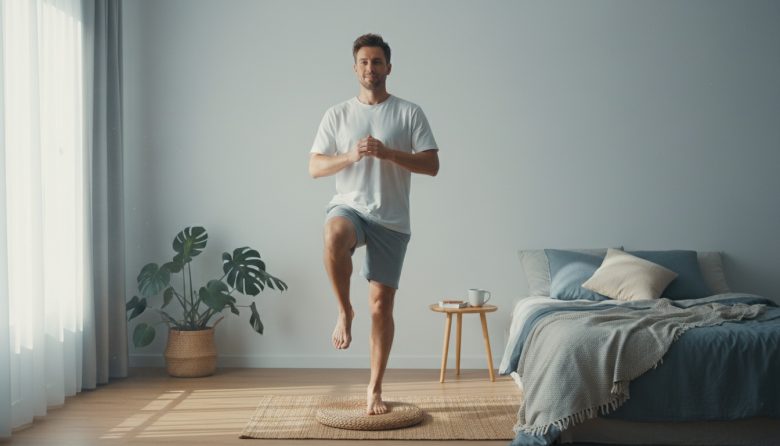
Picture this: it’s 6 PM on a Tuesday, and instead of collapsing onto the couch feeling wiped out from your workday, you finish with a quiet buzz of energy. Your body feels awake, your mind clearer, ready for dinner or family time without that heavy drag. That’s the gentle shift a light home workout routine brings to busy weekdays—no gym, no gear, just steady movement woven into your day.
I remember my own turning point last year. Evenings were lost to endless scrolling, leaving me stiff and sluggish. I started with just 10 minutes of simple moves after brushing my teeth, and within a week, consistency clicked. No dramatic overhaul, just small cues reducing friction. The payoff? Better sleep, sharper focus at work, and a routine that stuck because it fit my life.
Light routines like this build sustainable consistency without overwhelm. They boost energy steadily, ease desk-bound tension, and create small wins that add up. In this guide, we’ll use a simple 4-pillar framework to get you moving. You’ll get a ready-to-use 20-minute weekday flow in a checklist table, fixes for common blockers, a tiny metric for progress, and habit stacking tips. Ready for your small start? Let’s build momentum together.
Build Momentum with a 4-Pillar Framework for Weekday Movement
This framework rests on four pillars: cue your space, stack short moves, gentle progression, and reflect and adjust. Each one lowers friction and builds cues for consistency. Think of it as a gentle scaffold for your routine, not a rigid plan.
Pillar 1: Cue your space with environment tweaks. Place a yoga mat by your bedroom door or sneakers near your desk. These visual nudges spark the habit without thinking. I keep my mat rolled out post-laundry day—it cues me every evening.
Pillar 2: Stack short moves onto daily anchors. Link 5-minute bursts to routines like post-coffee or after emails. This habit stacking borrows momentum from what you already do. One reader paired squats with their morning pour-over, turning it into a seamless flow.
Pillar 3: Embrace gentle progression through small wins. Start with 8 reps, add one weekly if it feels good. Track energy, not perfection. For core focus, weaving in ideas from how to gently strengthen your core at home keeps it sustainable and targeted.
Pillar 4: Reflect and adjust for lasting consistency. End each week with a quick note: what flowed, what snagged? Tweak cues accordingly. This pillar turns trial into tailored routine, ensuring steady progress over time.
Apply these pillars one at a time. Pick pillar 1 this week—cue your space today. You’ll notice movement becoming a natural cue, not a chore.
Sample 20-Minute Weekday Flow: Monday Through Friday
Here’s your plug-and-play weekday light workout habit checklist. It’s bodyweight-only, 20 minutes max, with built-in variety to keep it fresh. Use the table to glance and go—print it or screenshot for your fridge.
| Day | Warm-Up (2-3 min) | Main Circuit (3 rounds, 10-12 reps each) | Cool-Down (2 min) | Total Time | Cue Suggestion |
|---|---|---|---|---|---|
| Monday | Arm circles + marching in place | Squats, wall push-ups, bird-dog holds, reverse lunges | Seated forward fold + neck rolls | 20 min | Right after breakfast coffee |
| Tuesday | Cat-cow stretches + shoulder shrugs | Glute bridges, knee push-ups, side leg lifts, step-ups | Standing quad stretch + wrist flexes | 20 min | Post-lunch email check |
| Wednesday | Torso twists + ankle circles | Chair dips, standing rows (imaginary pulls), calf raises, plank shoulder taps | Child’s pose + deep breaths | 20 min | After brushing evening teeth |
| Thursday | Leg swings + wrist circles | Lunges, incline push-ups, dead bugs, wall sits | Hamstring stretch + arm crosses | 20 min | Pre-dinner unwind |
| Friday | Full-body shakes + gentle jumps | Squats with twist, push-ups on knees, supermans, side lunges | Full-body stretch + sigh releases | 20 min | End-of-week victory lap cue |
Before this routine, my Tuesdays ended slumped over my desk, back tight from hours typing. After? I flow through the circuit feeling loose, energy steady into evening. Habit stack it with a daily anchor, and it becomes your reliable weekday rhythm.
Scale as needed: drop to 2 rounds if short on time. The circuit builds strength gently—squats for legs, push-ups for upper body, planks for core stability. Consistency here creates those sustainable small wins.
Tame Common Blockers with Friction-Free Fixes
Blockers pop up, but they’re cues for tweaks, not stops. Let’s address four common ones with practical fixes rooted in low-friction habits.
- Time crunch: Shrink to 10 minutes—warm-up plus one circuit round. I do this during kids’ bath time; it fits anywhere. Set a phone cue for “micro-move” at peak busy hours.
- Low energy after work: Shift to morning or pair with hydration tracking, like tips from how to track water intake with simple tools, for a natural boost. Evening slumps fade when fueled steadily.
- Forgotten cues: Use visual anchors—mat by door or phone wallpaper reminder. One try: sticky note on laptop saying “20 min flow?” It sparked 80% more sessions.
- Sore spots or desk fatigue: Swap in chair-based options, drawing from how to do gentle chair yoga for desk days. Gentle twists release tension without strain; listen to your body always.
These fixes turn blockers into progress points. Test one this week—what shifts for you?
Layer in a Tiny Metric for Visible Steady Progress
Your tiny metric: track “cues hit” daily. Just one checkmark per session—fridge note, app, or calendar X. No reps or intensity, purely “did the cue trigger movement?”
Why this works: it’s frictionless, celebrates consistency over perfection. Seeing five X’s by Friday builds motivation through small wins. I used a simple notepad: week 1 had three; by month two, daily without force.
Example tracking snippet:
- Mon: Cue hit ✓ (post-coffee squats)
- Tue: Cue hit ✓ (lunch flow)
- Wed: Cue missed—tweak tomorrow
Review weekly: 70% cues hit? Steady gold. Adjust pillars based on patterns. This metric makes progress tangible, fueling your routine’s rhythm.
Habit Stacking Secrets: Pair Moves with Your Daily Anchors
Habit stacking links new moves to unbreakable routines, slashing decision fatigue. Choose anchors like coffee sip, email open, or tooth-brush—moments you never skip.
Real examples: Post-breakfast, stack 10 squats while coffee brews. Grounds you, wakes legs gently. After inbox zero, drop for three plank rounds—5 minutes max, desk energy renewed.
My personal try: Evening tea became glute bridge time. Mat by kettle cues it automatically. Environment tweaks like this—clear floor space, soft light—make stacking effortless.
Start small: pick one anchor, one move. Monday: coffee + arm circles. Notice how it borrows routine power for sustainable flow. Over days, it layers in naturally.
Another: Pre-bed, stack cool-down stretches with lotion routine. Reduces friction, aids sleep. These secrets turn weekdays into movement-friendly territory.
Your Gentle 7-Day Weekday Challenge to Lock It In
Here’s your call: choose one move from the table (say, squats) + one cue (post-coffee). Try for 7 weekdays straight. No all-or-nothing—just show up via that cue.
Expect wobbles; celebrate shows. Track your tiny metric daily. By day 7, you’ll feel the steady energy shift I did—lighter steps, clearer evenings.
Positive nudge: you’re building a cue-rich routine for life. Share your win in notes to yourself. Small start, lasting habit— you’ve got this.
Frequently Asked Questions
Can I do this routine if I’m a total beginner?
Absolutely, it’s designed for all levels with built-in mods. Start with 5-8 reps per exercise, or halve rounds to one if needed. Focus on form over speed—move with your breath, like slow squats holding a chair for balance. Many beginners I know began here, gaining confidence through these gentle entry points.
What if I miss a day—does it ruin my streak?
Not at all; streaks thrive on cues, not perfection. Miss one? Gently restart with your chosen anchor next time—no reset needed. This approach keeps momentum sustainable, turning occasional skips into learning moments for better cues.
Do I need any equipment for these light workouts?
No equipment required—pure bodyweight keeps it accessible anywhere. A yoga mat softens floors if you like, or use a sturdy chair for support in push-ups or dips. I’ve done full weeks on carpet alone; simplicity is the beauty here.
How do I know if the routine is too easy or hard?
Listen via your tiny metric and energy cues. Too easy? Add a rep or round next session. Too hard? Drop reps or swap for chair yoga variations—adjust weekly based on how you feel post-flow, ensuring steady, enjoyable progress.
Can I adapt this for weekends or longer sessions?
Yes, easily—stack two days’ circuits for 30-40 minutes or extend cool-downs. Keep the light vibe: weekends might mean outdoor walks as warm-ups. This flexibility maintains consistency across your week without added pressure.