I remember the day I bent over to pick up a laundry basket and felt that familiar twinge in my lower back. It wasn’t dramatic, just enough to remind me my core needed attention. After trying gentle bird-dog holds each morning for a couple of weeks, I noticed I stood taller and moved with more ease through my day.
Gentle core strengthening at home brings steady benefits like better posture, reduced back pain, and smoother daily tasks such as gardening or playing with kids. You don’t need intense workouts—just consistent, low-friction cues that fit your routine. Ahead, I’ll share a simple 4-pillar framework that helped me build this habit sustainably, along with easy moves and fixes for real-life hurdles.
Start with Breath: Your Anchor for Core Awakening
Diaphragmatic breathing wakes up your core without strain, acting as your first cue for any session. Place one hand on your belly and inhale deeply through your nose, letting it rise while your chest stays still. Exhale slowly, feeling your belly draw in gently—this engages the deep core muscles naturally.
I stack this to my morning coffee ritual: while the water boils, I do five breaths. Before, my posture slumped during work calls; after a week, I sat steadier without thinking. This tiny anchor reduces friction and sets a calm tone for the rest of your routine.
Practice twice daily at first, holding each breath cycle for 4-6 seconds. Over time, it cues your body to activate core support during everyday lifts. When considering a simple 10-minute evening relaxation routine, weave this breath in to unwind while strengthening.
The 4 Pillars of a Gentle Home Core Routine
A strong core starts with these four pillars, designed for short home sessions that build over time. They emphasize cues, consistency, and recovery for sustainable progress. Let’s break them down with real examples from my routine.
- Pillar 1: Breath Cue – Begin every move with a full belly breath to activate your core softly. I cue this before standing from my desk, preventing slouchy habits.
- Pillar 2: Slow Engagement – Contract your core gently as if bracing for a light hug, without sucking in. This built my awareness during walks, making each step steadier.
- Pillar 3: Balanced Holds – Hold positions for 10-20 seconds per side, alternating to avoid fatigue. My bird-dog holds here turned grocery carrying from a chore to a breeze.
- Pillar 4: Restful Recovery – End with 30 seconds of easy breathing or child’s pose to reset. This pillar keeps sessions inviting, encouraging daily repeats.
Start with just one pillar per day to celebrate small wins. This framework fits 5 minutes, stacking easily into mornings or evenings. You’ll notice steadier posture as consistency grows.
Master These 5-Minute Moves for Everyday Stability
These bodyweight exercises target your core gently, focusing on stability over reps. Do them on a soft mat or carpet to cut friction. Aim for 2-3 rounds, 10-20 second holds each.
Bird-Dog: On all fours, extend one arm forward and opposite leg back, keeping hips level. Breathe steadily, hold, then switch. I added this to my kitchen counter—now chopping veggies feels balanced.
Dead Bug: Lie on your back, arms up, knees bent. Lower opposite arm and leg slowly toward the floor without arching. This move fixed my evening desk slump; before, I’d ache, now I unwind easier.
Seated Cat-Cow: Sit tall, inhale to arch your back gently (cow), exhale to round (cat). Circle 5 times. Perfect for low-energy days, it cues core awareness during meals.
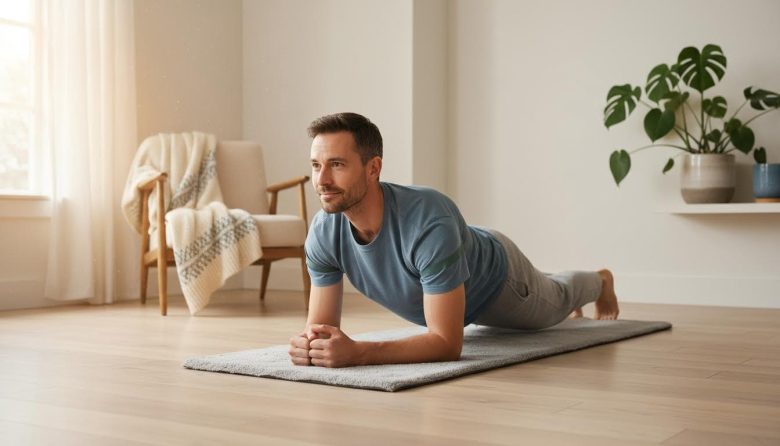
Wall Plank: Face wall, forearms on it, step back into a plank. Hold with core lightly engaged. My version shortens to 15 seconds—great for apartment living.
Side-Lying Leg Lift: Lie on side, lift top leg slowly 6 inches, lower with control. Do 8 per side. This strengthened my obliques for better side bends in yoga.
Environment tweak: Keep a folded towel nearby for knee padding. These moves build everyday stability, like lifting boxes without strain. Progress feels steady as holds lengthen naturally.
Core Strengthening Do’s and Don’ts for Safe Home Sessions
| Safe Move (Do) | Risky Habit (Don’t) | Why It Matters |
|---|---|---|
| Engage core with a slow belly breath before moving | Hold your breath or suck in forcefully | Allows natural support and oxygen flow, preventing dizziness |
| Move in a controlled, slow rhythm | Jerk or rush through holds | Builds strength steadily while protecting joints from strain |
| Keep neck neutral, gaze down or forward | Strain neck by looking up or craning | Maintains spinal alignment to avoid tension headaches |
| Alternate sides evenly | Favor one side repeatedly | Promotes balanced muscles for even posture |
| Shorten holds if shaky, build over days | Push through pain or fatigue | Ensures recovery and long-term consistency |
| End with restorative breaths or stretch | Jump up abruptly | Resets nervous system for daily calm |
| Use wall or chair for seated support | Force full planks if unstable | Reduces fall risk, eases beginners in |
| Check form in mirror weekly | Ignore subtle compensations | Catches imbalances early for sustainable gains |
Overcome Common Blockers with Friction-Free Fixes
No time hits everyone, especially busy parents like me. Stack core breaths to TV time: during commercial breaks, do seated cat-cow. This turned passive scrolling into active wins without extra minutes.
Soreness after starting? Shorten holds to 5 seconds and add rest days. I tried pillows under knees for bird-dog—discomfort vanished, routine stuck. Listen to your body for gentle adjustments.
Forgetting cues mid-day? Set a phone reminder for “core breath now” at lunch. Or place a sticky note on your fridge: “Breathe deep before eating.” These environmental nudges built my consistency effortlessly.
Low energy evenings? Opt for seated or wall options. Drawing from how to stay consistent with light activity, pair dead bugs with light stretches. You’ll end the day steadier, not drained.
These fixes lower friction, turning blockers into sustainable habits. My personal try: one fix per week led to daily practice. Small tweaks yield big steadiness.
Track One Tiny Metric for Sustainable Wins
Pick “core-aware breaths” as your tiny metric—one easy thing to log daily. Note 5 breaths per session in a phone app or bedside notebook. This celebrates consistency without overwhelm.
I started with tally marks on my calendar; hitting 5 felt like a small win. Over a month, it grew to 10 naturally, mirroring stronger posture. No fancy trackers needed—just honest tracking.
Review weekly: Did cues stick? Adjust one thing, like stacking to brushing teeth. This metric fuels steady progress, keeping motivation high through visible routines.
Stack Core Cues into Your Daily Flow
Habit stacking links new cues to existing routines for automatic consistency. Try bird-dog after brushing teeth: the mirror reminds you to engage core. This morning stack steadied my whole day.
During meals, do seated cat-cow between bites. Environment tweak: a yoga strap on your chair as a visual cue. I added this to dinners—digestion improved alongside core tone.
Pair wall planks with waiting for tea to brew. Like how to start a gentle daily walking habit, link core holds to movement cues for compounded ease. These stacks reduce decision fatigue.
Your CTA: Choose one exercise, like dead bug, plus one cue, such as post-coffee breaths. Try for 7 days, logging your tiny metric. You’ll feel sustainable shifts—steadier steps, less fatigue.
Environment boosts: Roll out a mat by your favorite chair or tape a “breathe” note to your computer. My living room now cues calm strength automatically. Small starts lead to lasting flow.
FAQ
Can beginners with back pain start these routines?
Yes, these gentle moves suit beginners, but modify with pillows under your back or knees for support. Start with seated options like cat-cow to build awareness safely. Always consult your doctor first for personalized clearance, especially with ongoing pain.
How often should I practice for steady progress?
Aim for 3-5 days a week, keeping sessions to 5-10 minutes. Listen to your body—rest if sore, focusing on consistency over intensity. This rhythm builds strength sustainably without burnout.
What if I feel shaky during holds?
Shakiness means your core is working; shorten holds to 5 seconds and focus on steady breaths. Build time gradually, adding 2 seconds weekly. Use wall or chair support to steady yourself as needed.
Do I need equipment for home core work?
No, these are bodyweight moves, but a yoga mat or folded blanket reduces floor friction. Optional yoga blocks or pillows enhance comfort for modifications. Household items like a sturdy chair work great too.
How do I know if my core is strengthening?
Look for everyday signs: easier posture, less back fatigue after standing, or steadier lifts. Track your tiny metric for consistency proof. Over weeks, clothes fit differently around your midsection from toned muscles.