Picture this: You wrap up a long day at your desk, stand up, and feel no nagging lower back twinge. Beginner core strengthening moves make that possible by building steady strength right where you need it most—for better posture, balanced energy, and a buffer against everyday strains. This guide shares a simple 4-pillar routine packed with practical cues to cut friction and fit into busy schedules. You’ll get step-by-step breakdowns for three key moves, plus tweaks for your space. Track one tiny metric for those small, sustainable wins that add up over time.
A stronger core foundation unlocks real-life ease. It supports your spine during long sits, steadies your steps on uneven ground, and boosts overall energy without overwhelming your day. Imagine shifting from slumped shoulders after work to standing tall effortlessly—that’s the steady progress these moves deliver.
Before starting core work, your evening might drag with fatigue and minor aches. After weaving in this routine, you end the day energized, moving smoother through chores or playtime. Habit stack it right after brushing your teeth for a seamless cue—no extra thought needed.
Unlock Everyday Wins with a Stronger Core Foundation
Steady core strength brings posture gains that last all day. You sit taller, reducing that forward hunch from screens. Aches fade as your midsection supports your back naturally.
Sustainable energy follows suit. Balanced muscles mean less fatigue from daily tasks like lifting groceries or chasing kids. Small wins build here: one week in, notice easier breathing during walks.
- Before routine: Slouch by noon, back tight by evening.
- After two weeks: Upright flow, steady energy through deadlines.
Habit stack example: Pair core pillars with your morning coffee cue. It takes just 10 minutes, creating consistency without force. For deeper recovery, consider easy tips to eat more whole foods naturally to fuel your efforts.
These wins compound quietly. Posture improves, energy steadies, and injuries stay at bay. Your body adapts with cues you control.
Prep Your Space for Frictionless Core Sessions
Start with minimal gear: a yoga mat or thick towel, a phone timer app, and a quiet floor spot. Clear 4×6 feet—no furniture battles. This setup cuts setup time to under 2 minutes.
Environment tweaks make sessions stick. Roll out the mat by your bed as a visual cue. Set a 5-minute slot post-shower when muscles are warm.
- Unroll mat at eye level for reminder.
- Queue timer for 10-minute sessions.
- Dim lights for focus, if evenings work best.
Time estimate: 2 minutes prep, 10 minutes routine. Tweak for knees: Add a folded blanket. Now you’re set for frictionless flow.
Your space shapes habits. These cues lower barriers, letting consistency build naturally. Ready for the pillars?
Build with the 4-Pillar Beginner Core Framework
Pillar 1: Breathe deep to warm up—inhale for 4 counts, exhale 4, standing tall for 1 minute. This cues your core to engage without strain. Transition smoothly to anchors.
Pillar 2: Anchor moves like plank and bird-dog for stability—hold steady, focus on form. Build here for full-core activation. Each builds on breath from Pillar 1.
Pillar 3: Add variety with dead bug for control—gentle presses teach deeper coordination. Slow reps ensure sustainable progress. Stack after anchors for rhythm.
Pillar 4: Recover steady—child’s pose for 30 seconds, note your tiny metric. Track average plank hold time. This closes the loop, reinforcing small wins.
- Full routine: 10 minutes total.
- Tweak: Shorten holds if new.
- Cue: Flow pillars in order daily.
This framework scales with you. Steady practice turns cues into habits. Next, dive into each anchor move.
Nail the Plank: Steady Hold for Full-Core Activation
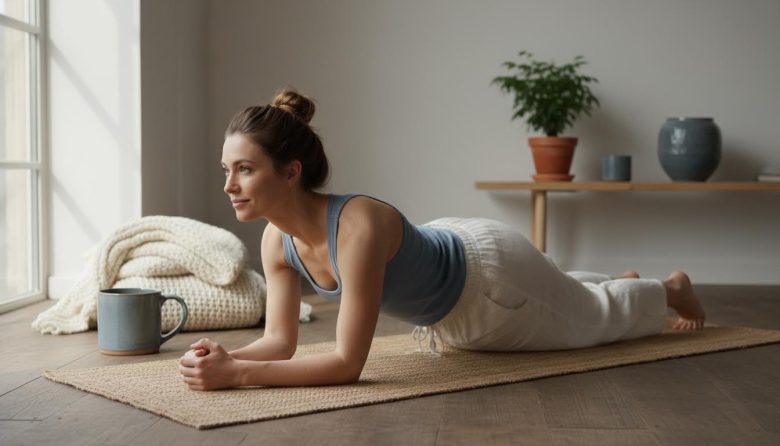
Start on forearms and toes, elbows under shoulders, body straight like a board. Engage core by pulling belly button to spine—hold without sagging. Breathe evenly: inhale nose, exhale mouth.
Beginner mod: Drop to knees, keeping hips level. Aim 20 seconds x 3 rounds, 30-second rests. Time estimate: 3 minutes total.
- Set timer for 20 seconds.
- Check form in mirror—neutral neck.
- Release to child’s pose.
Visual rhythm: Imagine a string lifting your hips. Common tweak: Wall plank—hands on wall, step back for angle ease. Builds to full version steadily.
Planks cue full-core wake-up. Small holds stack into strength. Feel the stability grow session by session.
Pro tip: If mornings fit, stack after how to make simple healthy breakfasts quickly for fueled starts.
Bird-Dog Reach: Balance Cues for Stability Gains
On all fours, hands under shoulders, knees under hips. Extend right arm forward, left leg back—keep hips level, no rock. Hold 10 seconds, return slow, switch sides x4 per side.
Friction fix: Place a mirror sideways for form check. Breathe out on extend, in on return. Time: 4 minutes for sets.
- Focus: Gaze down, neck neutral.
- Tweak: Shorter leg lift if wobbly.
- Progress: Add 2 seconds weekly.
Stack on plank cooldown—alternate without rush. This move hones balance cues. Stability gains show in daily poise.
Your core learns control here. Steady reps build without overwhelm. Transition to dead bug next.
Dead Bug Press: Gentle Twist for Deeper Control
Lie on back, knees bent tabletop, arms up. Press low back to floor, lower opposite arm and leg slow—hover 2 inches off ground. 8 reps per side x3, exhale on lower.
Safe entry: Keep knees bent always. Slow lowers cue control—no rush. Full set: 4 minutes.
- Arms press imaginary weight.
- Opposite limbs move together.
- Rest arms down between sides.
Progress cue: Extend legs straighter over time. Pairs well with how to create simple home stretching routines for recovery. Deeper control emerges gradually.
This pillar adds twist without strain. Sustainable form prevents slips. Framework complete—now refine with the table.
Core Form Essentials: Do’s and Don’ts Table
Use this table to anchor your form across pillars. It ties breath, holds, and tweaks into quick cues. Scan before sessions for steady execution.
| Do | Don’t | Quick Fix Cue |
|---|---|---|
| Engage core by drawing belly to spine | Let belly sag or hips pike | Exhale on effort; check mirror |
| Breathe steady—in nose, out mouth | Hold breath during holds | Count breaths: 4 in, 4 out |
| Keep neck neutral, gaze down | Craning neck up or forward | Align ears with shoulders |
| Start with mods like knees down | Push full form too soon | Build 5-10 sec increments |
| Move slow, control each rep | Rush or swing limbs | Hover 2 inches; pause top |
| Rest in child’s pose between | Skip recovery breaths | 30 sec rock side to side |
| Track hold times post-set | Forget metric logging | Note in phone: avg up 5 sec |
Table rows cover all moves. Apply to planks, bird-dogs, dead bugs. Form sticks with these glances—small tweaks yield big stability.
Tackle Common Blockers with Easy Environment Tweaks
Soreness hits newbies? Shorten holds to 10 seconds, add blanket padding. Focus breath over duration—eases in gently.
Skipped sessions? Set phone alarm as cue: “Core time” post-lunch. Habit stack with existing routines like tea break.
Form slips common? Mirror nearby or film once weekly. Visual feedback builds cues fast.
Tiny metric: Track average plank hold time. Jot in notes app after each session—aim weekly uptick of 5 seconds. That’s your small win proof.
- Blocker: Tight schedule → 5-min pillar 1-2 only.
- Blocker: Motivation dip → Mat out visible overnight.
- Blocker: Progress stall → Review table weekly.
These fixes lower friction across pillars. Consistency flows from tweaks. Now, your action step.
Choose one habit: the plank. Pair with one cue: right after morning brush. Try for 7 days, track your tiny metric. Steady core wins await—start small, build sustainable.
Frequently Asked Questions
Can I do these if I have back pain?
Yes, with modifications—start knee-down planks and tabletop dead bugs to minimize strain. Prioritize deep breathing over long holds, and always keep low back pressed gently to the floor. Consult a doctor first for personalized clearance, ensuring these moves support rather than aggravate. Progress slowly for safe relief.
How often for steady progress?
Aim for 3-4 sessions per week, keeping each to 10 minutes for sustainability. Stack with daily cues like post-meal walks to build routine without overload. Rest days allow recovery, turning practice into lasting strength—consistency over intensity wins here.
What if planks feel impossible?
Begin with wall or knee-down versions, holding just 10 seconds at a time. Build in tiny increments, using the table’s quick fixes for form. Mirror checks help isolate wobbles—soon full planks become approachable through these steady steps.
Track metric without apps?
Use a simple notebook: Jot hold time after each plank set, like “20/22/19 sec.” Weekly, average them for your win check—up 5 seconds signals progress. This low-friction log reinforces habits without tech reliance.
Scale up after 7 days?
Add 5 seconds to holds or swap bird-dog lead leg first for variety. Introduce one pillar tweak, like slower dead bug lowers. Reassess your metric—sustainable bumps keep momentum without burnout.