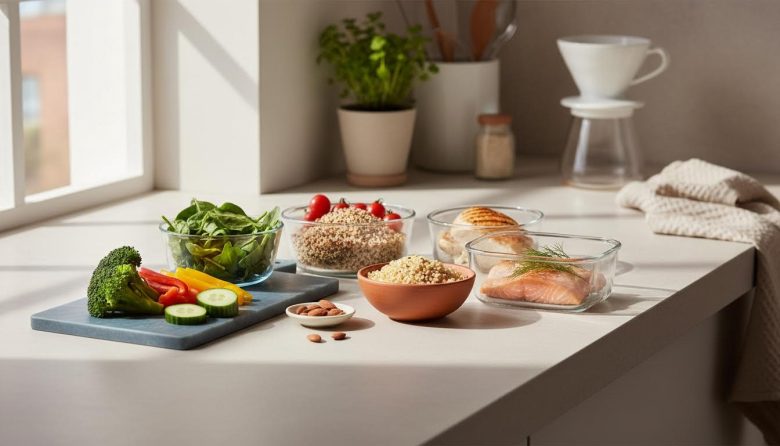
Picture this: Monday hits, and your fridge is a mystery box of wilted greens and half-empty jars. You grab takeout again, draining $80 from the week while energy crashes mid-afternoon. Now imagine a calm Sunday evening—fridge stocked with prepped meals, wallet saves $75 weekly, and steady fuel keeps you sharp through busy days.
Weekly meal planning builds that shift as a sustainable routine. It cuts decision fatigue, trims waste, and balances nutrition without complexity. You’ll save time and money while stacking small wins for consistent energy. Ahead, a simple framework with pillars, swaps, and routines tailored for real life.
Inventory Your Pantry: Build from Abundance, Not Emptiness
Start here to avoid duplicate buys and spark ideas from what you already own. This 15-minute Sunday routine cuts friction right away. Snap a quick photo of your shelves for easy reference later.
- Staples check (5 mins): Grains like rice or oats, oils, spices—note levels to dodge last-minute runs.
- Proteins scan (5 mins): Canned beans, eggs, frozen chicken—flag what needs using first.
- Veggies and fruits (5 mins): Fridge drawers for carrots, onions, apples—jot ripe ones for quick meals.
This tweak turns emptiness into abundance cues. You’ll reduce waste by 30% in week one. Transition smoothly to building balanced plates from your inventory.
Your Balanced Plate Blueprint: 4 Pillars for Every Meal
Every meal follows this simple framework: four pillars that ensure balance without rigid rules. It habit-stacks onto your routine—cue it when plating dinner. Visuals stay simple: divide your plate mentally.
- Half veggies/fruits: Fill space with affordable picks like cabbage, carrots, or seasonal apples for fiber and vitamins.
- Quarter protein: Eggs, lentils, or canned fish deliver steady energy without high costs.
- Quarter whole grains: Oats, brown rice, or quinoa base keeps you full longer.
- Flavor boosts: Herbs, garlic, lemon—low-cost adds that prevent boredom.
Example routine: Breakfast—oatmeal (pillar 3) with apple slices (1) and peanut butter (2). Lunch: Lentil soup with carrots (1+2) over rice (3), dash of cumin (4). This builds consistency. For extra morning flow, stack it with Your 7-Day Gentle Morning Stretch Plan to ease into the day energized.
These pillars flex for tweaks—like subbing quinoa for rice if pantry stock dictates. Small wins compound as plates become automatic. Next, layer in budget realities for sustainable planning.
Set a Flexible Weekly Budget: Realistic Numbers That Stick
Base your plan on last week’s receipts for grounded math. Aim for $50-75 per person, tweaking for seasons or household size. Track with a notes app cue—no fancy tools needed.
- Per-person breakdown: $10 proteins, $15 produce, $10 grains, $10-15 extras.
- Seasonal cues: Summer berries over winter imports; fall roots for cheap fills.
- Small win start: Review receipts Sunday—adjust one category down 10%.
This routine fosters steady progress, not overnight cuts. Apps like a simple spreadsheet reinforce habits. With budget set, explore swaps to amplify savings without losing nutrition.
Affordable Food Swaps to Keep Nutrition High and Costs Low
| Premium Choice | Budget Swap | Nutritional Match | Weekly Savings Estimate (for 4 servings) |
|---|---|---|---|
| Salmon fillets | Canned tuna in water | Omega-3s, lean protein (20g/serving) | $8 |
| Quinoa | Brown rice or barley | Fiber, whole grains (sustained energy) | $5 |
| Avocados | Extra virgin olive oil + tomatoes | Healthy fats, antioxidants | $6 |
| Chicken breast | Eggs or lentils | Complete protein (15-25g/serving) | $7 |
| Blueberries | Frozen mixed berries or apples | Vitamins C, antioxidants | $4 |
| Almonds | Peanut butter or sunflower seeds | Protein, healthy fats | $5 |
| Romaine lettuce | Cabbage or kale | Fiber, vitamins A/K | $3 |
| Greek yogurt | Plain yogurt + honey | Probiotics, calcium | $4 |
Integrate these into your pillars seamlessly—swap tuna into protein quarter for omega-3 wins. Test one per week to build familiarity. Weekly savings add up to $30-40, freeing budget for variety.
Environment tweak: Pin this table photo to your fridge as a cue. It lowers decision friction during prep. Now, map these into a weekly calendar for rhythm.
Map Your Week: A Simple Calendar for Consistent Wins
Dedicate 20 minutes Sunday evenings to this mapping routine. Use a phone calendar or paper grid—cue it post-inventory. Theme nights add variety without overwhelm.
- Monday: Meatless—Lentil stir-fry with cabbage (pillars 1,2,3).
- Tuesday: Grain bowl—Rice base with eggs, carrots.
- Wednesday: Soup night—Batch veggie-protein blend.
- Flex days: Leftovers or pillar tweaks.
Printable template: Sketch 7 boxes, note 1-2 meals/day. This consistency cue prevents blank-stare moments. It flows into batching for low-friction weeks.
Batch and Store Smart: Routines That Cut Weekly Friction
Carve out one 1-hour Sunday prep session after mapping. Chop veggies, cook grains in bulk—store in clear containers. Freezer tweaks: Portion soups flat for quick thaw.
- Container cues: Label with dates; stack by pillar type.
- Before: Chaotic weekday chops. After: Grab-and-heat in 5 mins.
This halves daily kitchen time. Steady access builds the habit loop. Spot blockers next to keep momentum.
Common Blockers and Steady Fixes for Long-Term Flow
Time crunch hits everyone—fix with 10-minute micro-preps like pre-chopping onions Sunday. Boredom fades via rotation cues: Swap pillars weekly from your table.
Impulse buys? Environment tweak: Shop list-only, post-budget map. Leftovers limbo? Flexible pillar remix—stir yesterday’s rice into today’s bowl.
Tiny metric: Log 1 home-cooked dinner per day this week. Track in notes for small wins. These fixes sustain the routine.
Pick 1 swap from the table + 1 pillar to focus on. Cue your Sunday 7pm routine. Try for 7 days, noting your tiny metric—steady progress awaits.
Boost post-meal energy with a Light Home Workout Routine for Weekdays, or walk to markets using How to Pick Comfortable Shoes for Daily Walks.
Frequently Asked Questions
What if my family has different tastes or restrictions?
Customize within the 4 pillars—offer build-your-own nights like taco bars with veggie/protein options. Prep base components separately for easy assembly. This keeps harmony without extra planning friction.
How much should a single person budget weekly?
A realistic range is $40-60, scaling with swaps like eggs over chicken. Start from last week’s receipts, trim 10% via the table. Adjust seasonally for steady flow.
Can I make this work with a super tight schedule?
Yes, cap routines at 30 minutes max—focus on freezer stacking for grab-and-go. Use inventory photos for 5-minute maps. Pillar plates assemble fast mid-week.
What’s the best way to minimize food waste?
Use first-in-first-out cues: Rotate fridge stock weekly during inventory. Flex leftovers into next meals via pillar remixes. Track ripe produce first for quick wins.
How do I scale for kids or larger households?
Double batch one pillar item Sunday, like rice or soup base. Kid-friendly swaps: Peanut butter over almonds, apples over berries. Involve them in mapping for buy-in.