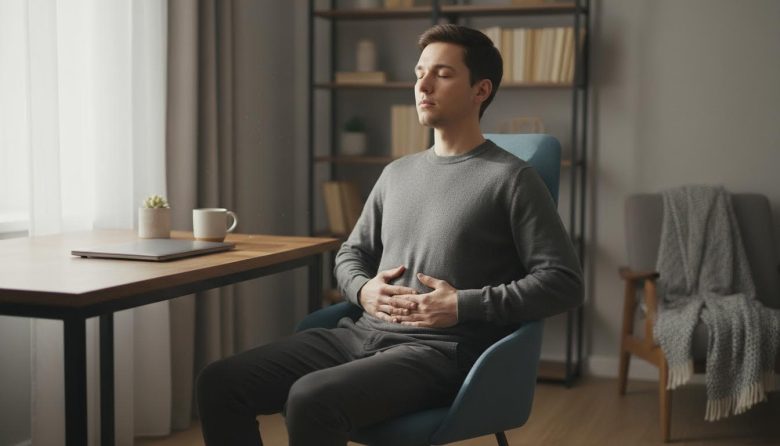
Picture this: it’s mid-morning, and the day’s demands are already piling up. Your shoulders tense, your mind races, and that familiar edge of stress creeps in. I remember my own version of this last year—rushing between calls, forgetting to pause until I felt frazzled by lunch.
That’s when I started weaving in short breathing exercises. Just 60 seconds shifted everything for me. These simple breaths activate your body’s natural calm switch, the vagus nerve, lowering stress hormones and boosting steady energy. The gains? Quieter mind, easier focus, and a gentle reset whenever needed.
Here are a few real perks I’ve noticed:
- Reduced tension after busy hours.
- Better sleep from evening unwinds.
- Steadier mood through daily ups and downs.
No fancy gear or long sessions required. These fit anywhere—your kitchen, desk, or car. Ahead, I’ll share a simple framework with four pillars to make this a lasting routine. Plus, quick techniques and tweaks for real life. Let’s ease into calm together, one breath at a time.
Unlock Steady Calm with 60-Second Breath Essentials
Short breathing exercises tap into your autonomic nervous system for quick calm. Science shows they stimulate the vagus nerve, signaling your body to relax and recover. This counters the fight-or-flight mode that busy days trigger.
These breaths take under a minute, perfect for real life. I tried one during my coffee break recently—inhale for four, hold, exhale slow. Instantly, my racing thoughts softened, and I returned to work clearer.
Benefits build with consistency: lower cortisol, improved heart rate variability, even sharper focus. No need for meditation apps or quiet rooms. They’re discreet and grounding, like a mini-vacation in your pocket.
Ready for options? Next, a glance at proven techniques to pick from. Each pairs science with simplicity for your daily flow.
Quick Breathing Routines at a Glance
Start small by choosing one technique from this table. They’re all 30-60 seconds, with clear steps and cues to anchor them.
| Technique | Steps | Ideal Cue | Key Benefit |
|---|---|---|---|
| 4-7-8 Breath | 1. Inhale quietly through nose for 4 counts. 2. Hold for 7 counts. 3. Exhale through mouth for 8 counts. Repeat 4 times. |
Waiting for kettle to boil | Quiets racing mind fast |
| Box Breathing | 1. Inhale for 4. 2. Hold for 4. 3. Exhale for 4. 4. Hold for 4. Do 4 rounds. |
Before opening emails | Steadies focus and heart rate |
| Diaphragmatic Breath | 1. Hand on belly, inhale to expand it (4 counts). 2. Exhale slowly, belly falls (6 counts). 3. Repeat 5-6 times. |
After sitting down at desk | Releases shoulder tension |
| Alternate Nostril | 1. Close right nostril, inhale left (4). 2. Close left, exhale right (4). 3. Inhale right, exhale left. 4 rounds. |
Pre-bed wind-down | Balances energy gently |
| Resonant Breath | 1. Inhale smooth for 5. 2. Exhale with soft “hum” for 5. Repeat 6 times. |
Mid-afternoon slump | Boosts calm vibrations |
Scan the table and note what draws you. Pair it with a cue that fits your day. One small pick leads to steady calm.
Anchor Breathing with the 4 Pillars Framework
This framework has four pillars to build breathing into your routine without overwhelm. It focuses on cues, stacking, and gentle tracking for sustainable wins.
Pillar 1: Select one technique.
From the table, pick based on your needs—like 4-7-8 for anxiety edges. I started with box breathing because it felt structured. Keep it to one for the first week.
Pillar 2: Pair with a cue.
Link it to a daily repeat, like toothbrush in mouth. Cues reduce friction. My cue? Coffee mug in hand—now it’s automatic.
Pillar 3: Stack on an existing routine.
Tie breaths to habits you already do. After brushing teeth, add diaphragmatic breath. This creates consistency without new slots in your day.
Pillar 4: Note your feel afterward.
Jot one word in your phone notes: “clearer” or “lighter.” I do this post-breath. It reinforces the win and builds momentum.
Try these pillars step-by-step. When considering how to improve posture with quick daily checks, layer breaths on top for deeper calm. Small anchors lead to lasting flow.
Stack Breaths into Everyday Flows Seamlessly
Habit stacking means attaching breaths to routines you won’t skip. This cuts decision fatigue and builds cues naturally.
Here are everyday examples:
- Morning sink rinse: After brushing, do box breathing while water runs. Before: rushed start. After: centered for the day.
- Email check: Before opening inbox, 4-7-8 breath. Shifts reactive mode to steady focus.
- Pre-bed scroll: Alternate nostril to unwind screen tension. Environment tweak: phone by bed as reminder.
Before stacking, my evenings dragged with worry. Now, breaths signal rest mode. Tweak your space too—sticky note on mirror or desk edge.
For movement lovers, stack with how to build easy home stretching routines. Inhale on stretch reach, exhale release. Flows become calmer overall.
Pick one stack today. Notice how it softens your daily rhythm.
Spot and Soften Common Blockers Effortlessly
Blockers pop up, like forgetting amid chaos or feeling rushed. The key is spotting them kindly and adding low-friction fixes.
Common ones and softens:
- Forgot during rush? Use a visual cue, like a small jar of smooth stones by your sink. Seeing it nudges the breath without guilt.
- Feel distracted mid-breath? Pair with something enjoyable, like favorite tea sip. Joy anchors attention gently.
- Day too packed? Shrink to 30 seconds. Forgive skips—they’re just pauses, not failures. Restart next cue.
I hit “rushed” mornings often. Adding a phone wallpaper reminder helped. Progress stays steady when blockers become teachers.
Transition to tracking next. Softening these keeps your calm growing.
Track Tiny Wins for Sustainable Spark
Your tiny metric: Tally breaths completed per day. Aim for three checkmarks in a notes app or paper. Simple, no perfection needed.
Example journal snippet:
- Mon: Coffee (box), desk (diaphragm), bed (4-7-8). Felt lighter overall.
- Tue: Two tallies. Still a win—steady builds.
This metric celebrates consistency over quantity. I started with ones and twos; now it’s effortless habit. Seeing streaks sparks motivation naturally.
Ready? Choose one technique + one cue. Try for 7 days, tally daily. Small starts create lasting spark. Pair with how to gently strengthen core at home for full-body calm routines.
You’ve got this—breath by breath, calm unfolds.
Frequently Asked Questions
Can I do breathing exercises if I’m new to mindfulness?
Absolutely, these are beginner-friendly by design. No prior experience needed—they’re quick body cues, not deep meditation. Start with diaphragmatic breath; feel your belly rise and fall naturally.
Many newcomers like me find instant relief. Build from there at your pace.
What if I forget during a hectic day?
Forgetfulness is normal; use forgiving cues like phone chimes or door thresholds. Set one recurring alarm for your top cue, like lunch prep.
Skips don’t erase progress. Just resume next natural moment—consistency rebuilds gently.
Is there a best time for short breaths?
No single best—tailor to your flow. Mornings ground you, afternoons reset slumps, evenings ease sleep.
Experiment with two slots first. Your energy will guide the sweet spots over time.
How do I know it’s working?
Notice subtle shifts: looser shoulders, clearer thoughts post-breath. Track mood pre- and post- for a week to spot patterns.
Wins compound quietly. If tension eases or focus sharpens, it’s landing well.
Can kids or beginners modify these?
Yes, simplify for all ages. Kids love box breathing as a “square game”—count aloud together. Beginners shorten holds to comfortable counts.
Make it playful: balloon belly breaths. Adaptations keep it accessible and fun.